
Introduction
As modern buildings continue to grow taller and architectural designs become more complex, safe access to elevated work areas has become a critical requirement for construction projects. Activities such as facade installation, external plastering, painting, glazing, maintenance, and repair work require reliable access systems that can improve productivity while maintaining worker safety.
Traditionally, contractors relied on scaffolding for such applications. However, scaffolding often requires significant installation time, occupies valuable site space, and increases labour requirements. As a result, many contractors today are shifting toward Suspended Rope Platforms, commonly known as gondolas or facade access systems.
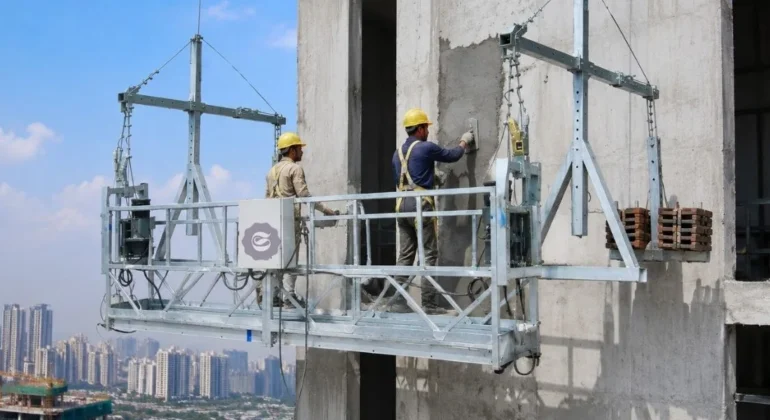
A Suspended Rope Platform provides a safe and efficient working platform for carrying out external building work at height. It offers faster installation, improved mobility, and better access to difficult-to-reach areas compared to conventional access methods.
However, selecting the right platform requires careful evaluation. Factors such as platform capacity, building height, safety systems, platform configuration, and after-sales support all influence long-term performance and project efficiency.
This guide will help you understand the key considerations when choosing a Suspended Rope Platform for your project.
Understanding Your Project Requirements
Before purchasing a Suspended Rope Platform, it is important to assess the specific needs of your project.
Consider the following:
- What is the height of the building?
- What type of work will be performed?
- How many workers will use the platform simultaneously?
- What tools and materials will be carried?
- What is the expected project duration?
- Does the building have a simple or complex facade design?
The answers to these questions help determine the ideal platform configuration, load capacity, suspension arrangement, and safety requirements.
A platform suitable for residential towers may not be the best solution for large commercial buildings, industrial facilities, or high-rise facade projects.
Key Factors to Consider When Selecting a Suspended Rope Platform
1. Platform Load Capacity
Load capacity is one of the most important considerations.
The platform must safely support:
- Workers
- Construction tools
- Equipment
- Working materials
Selecting a platform with insufficient capacity can affect productivity and compromise safety. Contractors should evaluate their daily operating requirements and choose a platform that provides adequate load-bearing capability without operating near maximum limits.
Projects involving facade work often require simultaneous handling of construction materials and equipment. Similar planning is required when selecting material transport solutions such as a Concrete Bucket for Construction Projects, where load capacity directly impacts operational efficiency.
2. Platform Construction Quality
Construction sites expose equipment to demanding working conditions.
A high-quality Suspended Rope Platform should feature:
- Galvanized platform construction
- Durable suspension mechanisms
- High-strength wire ropes
- Robust structural components
- Long service life under continuous operation
Galvanized platforms offer improved resistance against corrosion and harsh weather conditions, making them suitable for long-term construction and maintenance applications. The protective zinc coating, a key benefit of the galvanization process highlighted by the American Galvanizers Association, helps extend the platform’s lifespan while reducing maintenance requirements in demanding environments.
3. Essential Safety Features
Safety should always remain the highest priority when working at height.
A modern Suspended Rope Platform should incorporate multiple safety mechanisms, including:
- Safety Locks
- Limit Switches
- Anti-Tilt Protection
- Emergency Stop Controls
- Reliable Suspension Systems
- High-Quality Steel Wire Ropes
Advanced safety systems help prevent accidents and provide greater operational confidence for workers operating at significant heights.
4. Load Monitoring Systems
Many contractors overlook the importance of load monitoring.
Modern platforms can be equipped with Load Cell Systems that continuously monitor the weight placed on the platform.
Benefits include:
- Preventing overloading
- Improving worker safety
- Reducing operational risks
- Enhancing compliance with site safety requirements
Load cells provide real-time visibility into platform loading conditions and help maintain safe operating practices.
5. Ease of Installation and Relocation
Construction schedules are often tight.
A platform that can be assembled, dismantled, and relocated quickly offers significant advantages.
Benefits include:
- Reduced installation time
- Lower labour costs
- Faster project execution
- Greater operational flexibility
Efficient installation becomes especially valuable on projects requiring frequent movement of access equipment.
Environmental Factors That Influence Platform Selection
Wind Conditions
High-rise buildings are exposed to varying wind loads.
The platform should include reliable safety mechanisms capable of maintaining stability under changing site conditions.
Coastal and High-Moisture Locations
Projects near coastal regions face increased exposure to moisture and corrosion.
Galvanized components and corrosion-resistant construction help improve equipment durability and service life.
Industrial Environments
Industrial construction sites often expose equipment to:
- Dust
- Chemicals
- Harsh operating conditions
In such environments, durable construction and reliable components become essential for uninterrupted operation.
Complex Building Facades
Modern architectural designs frequently include:
- Curved surfaces
- Projections
- Recessed areas
- Glass facades
A properly configured Suspended Rope Platform provides safe and efficient access to these challenging work zones.
Common Mistakes Contractors Make
Choosing Only on Price
Selecting the lowest-priced platform may result in:
- Frequent maintenance
- Reduced reliability
- Higher downtime
- Increased operating costs
Long-term value is often more important than the initial purchase price.
Ignoring Safety Components
Safety locks, limit switches, load monitoring systems and reliable suspension mechanisms should never be considered optional.
Compromising on safety can lead to operational risks and costly project disruptions.
Overlooking Spare Parts Availability
Even the most reliable equipment requires maintenance.
Before purchasing, verify that:
- Spare parts are readily available
- Technical support is accessible
- Service assistance is available when required
Fast support minimizes downtime and keeps projects moving.
Not Considering Future Projects
Many contractors purchase equipment based solely on current project requirements.
A versatile Suspended Rope Platform can be utilized across multiple projects, improving long-term return on investment.
Why After-Sales Support Matters
Reliable after-sales support plays a major role in equipment performance throughout its lifecycle.
Contractors should evaluate:
- Technical assistance availability
- Spare parts support
- Service response time
- Installation guidance
- Maintenance support
Strong support helps ensure smooth operation and reduces unexpected project delays.
Benefits of Investing in a Quality Suspended Rope Platform
A well-designed platform delivers several operational advantages:
- Improved worker safety
- Faster project execution
- Reduced dependence on traditional scaffolding
- Lower maintenance requirements
- Better access to complex facades
- Enhanced productivity
- Long service life
Many modern construction projects utilize a combination of access equipment and concrete handling systems to maximize efficiency.
For contractors working on high-rise construction and facade projects, a reliable Suspended Rope Platform becomes an essential asset that contributes directly to project success.
Conclusion
Selecting the right Suspended Rope Platform requires more than comparing prices. Contractors should carefully evaluate project requirements, load capacity, platform construction quality, safety systems, installation efficiency, spare availability and long-term support.
A quality platform equipped with safety locks, limit switches, load monitoring systems, durable galvanized construction, and dependable service support can significantly improve safety and productivity on site.
By investing in the right equipment, construction companies can reduce downtime, improve operational efficiency, and ensure safer working conditions for their teams while achieving better project outcomes. At Smiit Constech, we provide reliable construction machinery and expert support to help contractors maximize productivity and achieve long-term project success.