
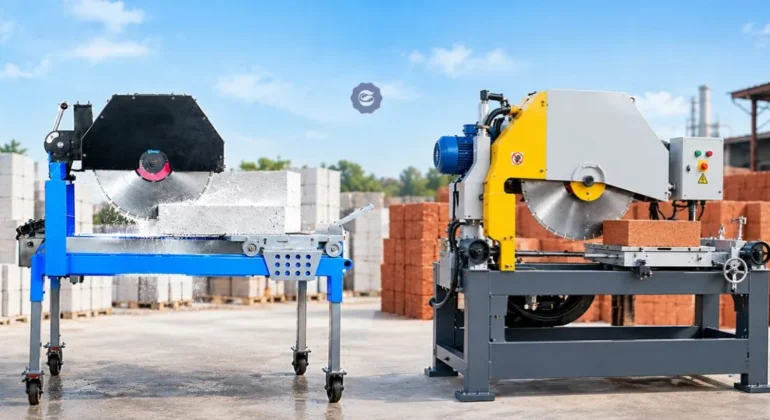

Construction sites use different materials for different applications. AAC blocks and refractory bricks are two important examples. Both need accurate cutting during installation and fabrication. However, their cutting requirements vary based on the material and application.
An AAC Block Cutter is designed for lightweight autoclaved aerated concrete blocks. A refractory brick cutter is designed for dense and heat-resistant bricks.
These machines support different types of work and require different cutting systems.
Knowing how each machine works helps contractors choose suitable equipment. It also supports better cutting accuracy, smoother workflows, and controlled material usage.
Understanding AAC Block Cutting
AAC blocks have a lightweight and porous structure. They are commonly used for walls, partitions, and other building applications.
An AAC Block Cutter provides controlled cutting for these blocks. It helps operators prepare blocks according to the required dimensions. This makes block preparation more consistent than relying only on manual cutting.
The machine also supports cleaner edges. Accurate cuts help blocks fit properly during installation. This can reduce unnecessary adjustments and material wastage.
For construction projects that involve different materials and site operations, choosing equipment according to the task is equally important. Contractors can explore the range of construction machinery to understand the equipment available for various construction requirements.
An AAC Block Cutter is especially useful when a project involves repeated block cutting. It gives the operator a more organised way to prepare blocks on site.
Understanding Refractory Brick Cutting
Refractory bricks serve a different purpose. They are made to withstand high temperatures. Industries use them in furnaces, kilns, boilers, fireplaces, and other heat-intensive applications.
These bricks have a dense and hard structure. They require a cutting system that can handle greater resistance.
A refractory brick cutter provides controlled cutting for these demanding materials. It helps create specific sizes and shapes for industrial applications.
Precise cutting becomes important when bricks form furnace or kiln linings. Correct dimensions help the bricks fit together more effectively.
Material Behaviour and Cutting Performance
The material being cut directly affects machine performance.
AAC blocks are lightweight and porous. Their structure allows an AAC Block Cutter to work with comparatively lower cutting resistance.
The cutting system needs to create clean cuts without causing unnecessary damage. Excessive force can lead to chipped edges or inconsistent dimensions.
Refractory bricks behave differently. Their dense structure creates greater resistance during cutting. The machine needs to handle this resistance while maintaining controlled movement.
This makes material behaviour an important factor when selecting cutting equipment.
Blade Selection Matters
The blade plays a major role in cutting performance.
An AAC Block Cutter needs a cutting system that suits the structure of AAC material. The correct blade helps create clean and consistent cuts.
AAC blocks can chip when operators use unsuitable cutting equipment. Matching the blade to the material helps maintain better cutting quality.
Refractory bricks need a more robust cutting solution. Their hardness and abrasive characteristics place greater demands on the blade.
Users should therefore check blade compatibility before operating the machine. The correct blade supports cutting performance and can also help reduce unnecessary wear.
Regular inspection and timely replacement of worn components also help maintain cutting equipment performance. Contractors can explore construction machinery spare parts to find components for compatible machinery and support routine maintenance.
Cutting Speed and Control
Cutting speed affects both productivity and cutting quality.
An AAC Block Cutter can support efficient cutting because AAC blocks are comparatively lightweight. This makes it useful for construction sites where operators prepare several blocks during the working day.
However, operators still need to maintain proper control. Excessive speed can affect the quality of the cut.
Refractory brick cutting often requires a more controlled approach. The harder material creates greater resistance. The operator needs to balance speed, accuracy, and blade performance.
Fast cutting does not always provide better results. The ideal cutting process maintains a practical balance between productivity and quality.
Machine Structure and Stability
Machine construction also plays an important role.
An AAC Block Cutter needs a stable structure for regular construction work. It should allow operators to position the block properly and make controlled cuts.
A practical design also helps when the operator handles several blocks during a project. Stability supports more consistent cutting.
Refractory brick cutting places greater demands on the machine. The equipment needs to manage the forces created when cutting dense material.
A strong and stable structure helps maintain controlled operation. It also supports consistent cutting during demanding industrial applications.
Where Each Machine Fits
Application is one of the most important factors when selecting cutting equipment.
An AAC Block Cutter mainly supports building and masonry work. Contractors use it to prepare AAC blocks for walls, partitions, and other construction requirements.
Its design focuses on practical block preparation. It supports consistent sizing and helps operators manage repeated cutting tasks.
Refractory brick cutters are more common in industrial applications. They support work involving furnaces, kilns, boilers, chimneys, and other high-temperature structures.
The cutting requirements can also change according to the final application. Refractory linings may require carefully shaped bricks for specific areas.
Selecting the machine according to the application helps avoid unsuitable equipment choices.
What to Consider Before Selecting a Cutter
Start by identifying the material. Confirm whether the project involves AAC blocks or refractory bricks.
Next, consider the required block or brick dimensions. Some projects need simple straight cuts. Others require more precise shapes.
The expected workload also matters. A machine used occasionally has different requirements from equipment used continuously on a large project.
Blade compatibility should also receive attention. The cutting system should match the material and intended application.
Operators should also consider machine stability, ease of operation, maintenance requirements, and cutting consistency.
For AAC construction work, an AAC Block Cutter provides a dedicated approach to lightweight block cutting. For refractory applications, a suitable refractory brick cutter provides the strength and control needed for dense materials.
Cutting requirements vary depending on the material and application. On construction sites, reinforcement bars require specialised cutting machines to achieve accurate cuts and support efficient rebar preparation. Check the Bar Cutting Machine Premium Hybrid Series to understand how dedicated machinery supports reinforcement bar cutting.
Why Material and Application Should Guide the Choice
Choosing a cutter only by appearance or cutting capacity can lead to poor results.
The material determines how much cutting resistance the machine faces. The application determines the required dimensions and cutting accuracy.
An AAC Block Cutter suits projects where teams regularly prepare AAC blocks. It provides a practical cutting solution for construction workflows.
Refractory brick cutting requires equipment that can handle harder and denser materials. The machine needs to provide controlled cutting without placing unnecessary stress on the equipment.
The right selection therefore depends on the complete cutting requirement rather than one specification alone.
Making AAC Block Cutting More Practical
AAC block construction often involves repeated cutting. Blocks may need adjustment around doors, windows, corners, columns, and other areas.
An AAC Block Cutter helps make these adjustments more systematic. Operators can prepare blocks according to the required dimensions rather than depending entirely on manual methods.
Consistent cutting can also support smoother installation. When blocks have suitable dimensions, workers can spend less time making repeated adjustments.
This makes the machine a useful part of projects where AAC blocks form a significant part of the construction process.
AAC blocks and refractory bricks both need accurate cutting, but their material properties and applications require different approaches.
An AAC Block Cutter is designed around lightweight AAC blocks and construction requirements. It supports controlled cutting, consistent sizing, and practical block preparation.
Refractory brick cutters handle denser and heat-resistant materials. They require suitable blades, stable construction, and controlled cutting performance.
The main factors to consider include material behaviour, blade selection, cutting speed, machine construction, and application.
Understanding these points helps contractors and operators select equipment that matches the actual work requirement.
For guidance on selecting an AAC Block Cutter according to your project requirements, contact Smiit Constech. The right cutting equipment can support better accuracy, smoother operation, and more consistent results.