

Investing in construction machinery requires careful thought. Every decision affects cost control, productivity, and long-term growth.
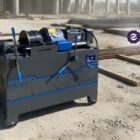
A bar bending machine i is one such investment that directly influences site efficiency. Contractors and project managers frequently ask one essential question.
How can we determine the return on investment before purchasing this machine?
Understanding ROI helps decision-makers justify the cost. It also helps them plan budgets with confidence.
Understanding ROI in the construction machinery context
ROI stands for return on investment. It measures how much value an investment generates compared to its cost.
In construction, ROI is determined by more than just revenue. It also depends on savings, efficiency, and risk reduction.
A bar bending machine improves the way steel bars are shaped on-site. It replaces manual bending methods.
This change affects labour use, material accuracy, and project timelines. All of these things affect ROI.
When you calculate ROI, you look at total benefits over time. You then compare these to the original and operating costs.
The outcome allows you to determine whether the investment makes financial sense.
Identifying the total investment cost
The first step is to understand the total cost of ownership. Many purchasers solely consider the machine’s pricing. This strategy produces an incomplete picture.
The total investment cost usually includes the purchase price. It also covers installation and commissioning.
Training costs for operators matter as well. Transportation and handling charges add to the initial outlay.
Operating costs are also an important consideration. These include electricity consumption, regular maintenance, and spare parts.
These costs eventually have an impact on overall profits.
When you calculate ROI, you should consider all these elements. A clear cost base leads to a more accurate result.
Measuring productivity gains
Productivity is the primary benefit of a bar-bending machine. Manual bending takes time and effort. It also depends heavily on skilled labour availability.
A machine processes bars faster and with consistent accuracy. This speed allows teams to complete more work in less time. Higher output directly supports project schedules.
You can measure productivity gains by comparing output before and after machine use.
For example, you can track how many bars are bent per day manually. You then compare this figure with the machine output.
The difference represents a productivity gain. This gain translates into time savings. Time savings often reduce overall project costs.
Calculating labour cost savings
Labour costs form a major expense in construction projects. Manual bar bending requires multiple workers. It also increases dependency on skilled labour.
A bar bending machine reduces this dependency. One trained operator can manage the process. This change lowers daily labour costs.
To calculate savings, identify the number of workers used earlier. Note their daily wages. Then, calculate the reduced workforce requirement after machine adoption.
The difference in labour expense over a month or year forms a key ROI component. These savings continue throughout the machine’s working life.
Reducing material wastage
Material waste affects both cost and sustainability. Manual bending often leads to inaccuracies. Incorrect bends result in rejected bars.
A machine ensures consistent angles and lengths. This precision reduces steel wastage. It also improves structural reliability.
To calculate this benefit, track material loss before and after using the machine. Even small percentage reductions create significant savings in large projects.
Reduced wastage also supports better inventory planning. This improvement adds indirect financial value.
Assessing quality and rework reduction
Quality issues lead to rework. Rework consumes time, labour, and material. It also disrupts project flow.
A bar bending machine improves bending accuracy. It ensures compliance with design specifications. This accuracy reduces errors on-site.
Lower rework levels translate into cost savings. They also protect project timelines. These benefits should form part of the ROI assessment.
Although quality gains feel intangible, they have a clear financial impact. Fewer corrections mean smoother operations.
Estimating the payback period
The payback period shows how quickly the investment recovers its cost. It measures how long it takes for total benefits to equal total investment.
To calculate this, divide the total investment cost by annual savings. Annual savings include labour reduction, productivity gains, and material savings.
A shorter payback period indicates lower financial risk. It also improves cash flow planning.
In construction, equipment with predictable payback periods supports better capital planning. This clarity helps decision-makers move forward with confidence.
Considering machine lifespan and utilisation
ROI depends on how long and how often the machine operates. A longer lifespan improves total returns. Higher utilisation increases value generation.
You should estimate the machine’s working life in years. You should also assess expected daily or monthly usage.
Machines used across multiple projects deliver better ROI. Idle equipment reduces return potential.
Proper maintenance supports longer life and consistent performance. This factor protects the investment over time.
Accounting for indirect business benefits
Some benefits do not appear directly in cost sheets. They still influence ROI.
Faster project completion improves client satisfaction. It also strengthens the reputation. Reliable delivery helps secure future contracts.
Improved safety forms another indirect benefit. Machines reduce manual handling risks. Safer sites reduce downtime and insurance exposure.
These advantages support long-term business growth. While harder to quantify, they add strategic value.
Putting the ROI calculation together
Once you identify costs and benefits, you can calculate ROI using a simple approach. Subtract total costs from total benefits. Divide the result by the total costs. Multiply by one hundred.
This calculation gives a percentage. A positive and strong percentage indicates a healthy investment.
The key lies in realistic assumptions. Overestimated benefits or ignored costs distort results. Honest evaluation leads to better decisions.
Calculating ROI when investing in a bar bending machine requires structured thinking. It goes beyond the purchase price. It involves productivity, labour, quality, and long-term value.
When you assess each factor carefully, the investment becomes clearer. The machine shifts from a cost item to a value generator. This shift supports smarter project planning.
A well-calculated ROI builds confidence. It also aligns financial logic with operational needs. For construction businesses aiming for efficiency, this understanding proves essential.
If you are evaluating bar bending machines and want expert guidance, Smiit Constech, a trusted bar processing machines manufacturer, offers industry-focused insights and reliable manufacturing expertise to support informed investment decisions.
Lorem ipsum dolor sit amet, consectetur adipiscing elit. Ut elit tellus, luctus nec ullamcorper mattis, pulvinar dapibus leo.