
Proper ground preparation creates the foundation for a successful construction project. Loose soil and aggregate can lead to settlement, cracks, and surface failure. Effective compaction helps create a dense and stable base for the work ahead.
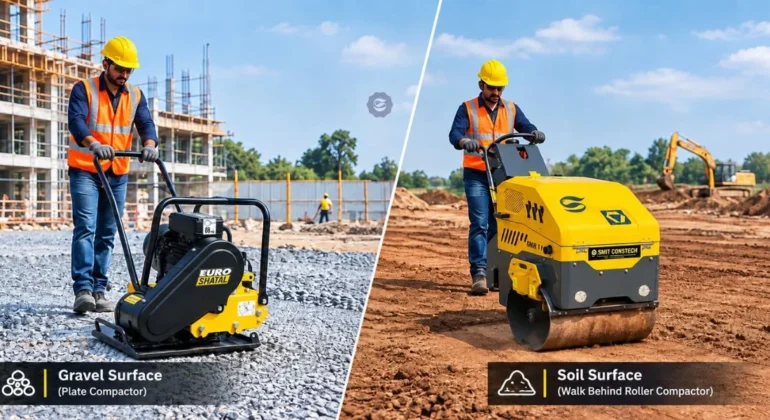
Soil compactor rollers and plate compactors are two important machines used for this work. Both deliver compaction, but they work in different ways.
A roller provides wide coverage for large areas, while a plate compactor offers targeted force in smaller & tight spaces like nearby to columns. Different compaction methods can help contractors choose the right machinery for their application.
So, which option is right for your project? The answer depends on the material, project size, required compaction depth, site access, and productivity requirements. This guide compares rollers and plate compactors to help you make a practical choice.
Why the Right Compaction Equipment Matters
Compaction reduces the air spaces between soil or aggregate particles. This increases material density and improves ground stability.
Proper compaction creates a stronger base for roads, foundations, parking areas, pavements, and other structures. It also helps reduce settlement and surface movement.
However, different materials respond differently to compaction. Project size also affects machine selection. A roller may deliver excellent results on a large road project but may not fit inside a narrow trench.
How Rollers Deliver Powerful Surface Compaction
Rollers use a heavy vibratory drum to apply pressure to the surface. Vibratory models add controlled vibration to transfer force deeper into suitable materials.
Their wide drums allow rollers to cover large areas efficiently.)This makes them highly suitable for road construction, asphalt paving, foundations, parking lots, and large site preparation projects.
Different roller configurations support different applications.
Smooth drum rollers work well with granular materials and asphalt. Padfoot rollers provide concentrated force for cohesive soils. Vibratory rollers improve compaction efficiency where vibration suits the material.
Rollers also support repeated passes across large surfaces. Their broad working width helps maintain consistent coverage and productivity.
For large construction projects, roller-based compaction equipment provides the coverage and operating capacity needed to keep work moving.
How Plate Compactors Deliver Targeted Compaction
Plate compactors use a vibrating base plate to transfer force into the surface. Their compact structure gives operators greater control in smaller work areas.
They work well where large rollers cannot operate comfortably. Contractors commonly use them for paver installation, sidewalks, driveways, trenches, landscaping, and repair work.
A plate compactor can move around curbs, walls, posts, and other obstacles. This makes it particularly useful when the site includes narrow sections or restricted access.
Earth compactors also support precise work. Operators can focus compaction on specific areas without bringing larger machinery into a confined workspace.
For small and detailed applications, plate-based compaction equipment offers practical access and control.
Roller vs. Plate Compactor Performance
The two machines differ in several important areas.
| Factor | Roller | Plate Compactor |
| Ideal project size | Large | Small to medium |
| Working area | Open surfaces | Confined areas |
| Compaction method | Drum pressure and vibration | Vibrating plate |
| Coverage | Wide | Focused |
| Compaction depth | Generally deeper | Generally shallower |
| Maneuverability | Requires more space | Easy to move |
| Common applications | Roads, asphalt, foundations | Pavers, trenches, repairs |
| Productivity | High on large surfaces | High in smaller areas |
A roller focuses on coverage and productivity. A plate compactor or earth compactor focuses on access and control.
Neither machine is universally better. The correct choice depends on the application.
Match the Machine to the Construction Material
Material type plays a major role in compaction.
Granular materials such as sand, gravel, and crushed stone respond well to vibration. Both rollers and plate compactors can handle these materials when the machine matches the project requirements.
Cohesive materials such as clay require stronger and more concentrated compaction. Padfoot rollers often suit these applications because their drum design applies force directly into the soil.
Asphalt requires controlled compaction and a suitable drum configuration. Smooth drum rollers commonly support asphalt work and help create a consistent surface.
Selecting compaction equipment according to material type helps contractors achieve the required density more efficiently.
Choose a Roller for Large-Scale Applications
A roller becomes the practical choice when the project covers a large and open surface.
Road construction is one of its primary applications. Rollers compact the base layers and support asphalt compaction after paving.
Large foundations also benefit from roller compaction. Proper ground preparation provides a stable base for further construction.
Parking areas, industrial sites, and large commercial developments also require machines that can cover substantial areas without unnecessary delays.
The roller’s wide drum reduces the time required to cover large surfaces. Its weight and vibration also provide strong compaction performance where suitable.
When coverage, depth, and productivity are priorities, roller compaction equipment provides an effective solution.
Choose a Plate Compactor for Confined Areas
A plate compactor is better suited to smaller and restricted work areas.
Paver installation is a common application. Contractors use plate compactors to prepare suitable base materials before paving and to support finishing work when required.
Trenches present another important application. Utility and landscaping projects often involve narrow areas where a roller cannot operate.
Plate compactors also work well around curbs, walls, foundations, and other structures. Their smaller design allows operators to reach sections that larger machines cannot access.
When precision and accessibility matter more than wide coverage, plate-based compaction equipment provides the right balance.
Evaluate Site Access Before Selecting Machinery
Site access can determine the most suitable machine.
A roller needs sufficient room for forward movement, reversing, and turning. Open construction sites provide the best operating conditions.
A plate compactor requires much less space. Operators can move it through narrow sections and work closer to fixed structures.
Before selecting compaction equipment, review the site layout. Check access points, working width, obstacles, slopes, and turning space.
This simple assessment helps prevent machine limitations from slowing the project.
Compare Compaction Depth and Productivity
Compaction depth is another important consideration.
Rollers generally provide broader and deeper compaction. Their weight and vibration allow them to work effectively across suitable base materials.
Plate compactors generally focus on shallower layers. They provide targeted compaction and work efficiently in smaller areas.
Productivity also depends on the project size. A roller delivers greater output across large surfaces. A plate compactor can deliver better practical productivity when the site includes narrow or detailed sections.
The best compaction equipment balances depth, coverage, access, and operating efficiency.
Look Beyond Machine Size
Machine selection should not depend only on physical size or power.
Contractors should consider the required application, material characteristics, working width, compaction method, operating conditions, and expected workload.
Build quality also matters. Construction machinery needs to handle demanding site conditions and regular operation. Reliable components, practical controls, serviceability, and durable construction can contribute to long-term machine value.
A machine that matches the application performs more effectively than an oversized or unsuitable option.
Make the Right Compaction Equipment Decision
Rollers and plate compactors each solve different construction challenges.
Choose a roller when the project involves large open surfaces, road construction, asphalt, foundations, or extensive soil preparation.
Choose a plate compactor when the project involves confined spaces, trenches, pavers, sidewalks, landscaping, or localized repair work.
The right Compaction Equipment depends on the material, project size, required depth, site access, and productivity target.
A clear assessment before work begins helps contractors select machinery that supports efficient operation and consistent compaction results.
Choose Machinery Built for Construction Demands
Construction projects require machinery that matches real job-site conditions. The right compaction solution supports productivity, surface stability, and efficient site operations.
Smiit Constech (title: Trusted Wacker Neuson Equipments Dealers in India Euro Shatal Dealer in India & Plate compactor manufacturer in India & Walk behind roller manufacturer in India) provides construction machinery designed for demanding applications and professional construction requirements. From project-specific selection to machinery requirements, choosing the right machine starts with understanding the work.
Contact Smiit Constech today to discuss your project requirements and find the right compaction Equipment for your application.