
Concrete placement decides the speed and quality of construction. Even with the right mix, poor handling can slow the job and affect structural strength. This is why the method of concrete transfer matters as much as the material itself.
On most sites, contractors use two common methods to place concrete. One is the concrete bucket. The other is the concrete pump. Both methods serve the same purpose, but each suits a different site condition.
Choosing the wrong placement method increases labor cost, material loss, and project time. It also affects surface finish, structural consistency, and productivity on-site.
This is where the right equipment choice becomes important. Contractors must decide based on site layout, pour volume, height, reach, speed, and access.
At Smiit Constech, we help contractors choose practical concrete handling solutions built for site efficiency. Whether the project needs controlled lifting or continuous pumping, the right method improves output and reduces site delays.
Understanding Concrete Bucket and Concrete Pump
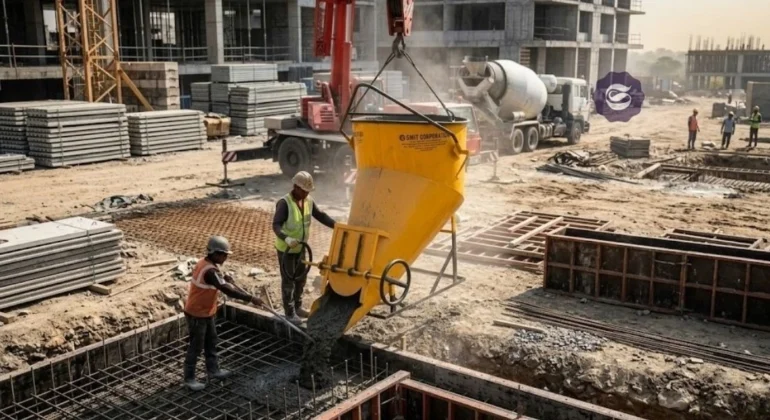
A concrete bucket is a lifting container used to carry concrete through cranes or hoists. It helps place concrete in a controlled manner at a selected point. Contractors often use it for vertical transfer and targeted pouring.
A concrete pump moves concrete through pipelines using pressure. It delivers concrete directly to the pour point with speed and consistency. Contractors use it for fast and continuous placement across wide or elevated areas.
Both methods are useful. The right choice depends on the project requirement.
When to Use a Concrete Bucket?
A concrete bucket works best when the site needs controlled and measured concrete placement.
It is suitable for:
- High-rise core structures
- Column and wall concreting
- Small to medium pours
- Congested sites
- Sites with crane access
- Controlled vertical lifting
A concrete bucket gives better control during placement. It helps reduce overpouring and supports accurate discharge in focused areas. Operators can place concrete exactly where needed.
This method is useful when the pour volume is lower, and placement accuracy matters more than speed.
Key Benefits of Concrete Bucket
Concrete buckets offer precise placement control, allowing accurate and efficient discharge during column, beam, and wall concreting.
They are ideal for vertical lifting, working seamlessly with tower cranes and hoists, making them well-suited for multi-story construction projects.
With minimal setup requirements compared to pump systems, they save both time and effort on-site. Additionally, their design makes them highly effective in tight spaces, ensuring smooth operation even in compact job sites with limited movement.
Limitations of Concrete Bucket
Concrete buckets are slower than pumps. They depend on crane availability. They also limit output in large slab pours where continuous flow is needed.
When to Use a Concrete Pump
A concrete pump works best when the site needs speed, reach, and continuous concrete flow.
It is suitable for:
- Large slab casting
- Raft foundations
- High volume pours
- Long horizontal reach
- High rise floor slabs
- Fast track construction
A concrete pump moves concrete directly to the pour point through pipelines. This reduces manual movement and speeds up the process.
It is the better choice when the site demands faster output and consistent pouring over a large area.
Key Benefits of Concrete Pump
Concrete pumps enable fast and efficient placement, significantly reducing pouring time while maintaining a continuous and steady flow of concrete.
This consistent movement enhances slab quality and minimizes the risk of cold joints. They are also capable of reaching long distances and accessing challenging areas with ease.
Additionally, pumps reduce the need for manual handling, improving overall labor efficiency and streamlining on-site operations.
Limitations of Concrete Pump
Concrete pumps need setup space, pipeline planning, and regular cleaning. They may not suit very small pours where setup time becomes inefficient.
How to Choose the Right Method?
The right choice depends on the site, structure, and pouring requirement. Contractors should assess the following before selecting equipment.
1. Project Size
For small and controlled pours, use a concrete bucket. For large volume pours, use a concrete pump.
A bucket works better when output is limited and control is critical. A pump works better when speed and volume matter more.
2. Site Access
Check how easily equipment can move on site.
If the site has crane access but limited ground space, a bucket is practical. If the site has open access for pipeline setup, a pump is more efficient.
3. Pouring Height and Reach
For vertical lifting with crane support, use a concrete bucket.
For long horizontal reach or multiple pour points, use a concrete pump.
The required distance plays a major role in equipment selection.
4. Pour Speed
If the project follows a tight timeline, pumping saves time.
A bucket gives more control but takes longer. A pump improves speed and supports faster project movement.
5. Labor and Equipment Availability
Buckets depend on crane support and skilled lifting control. Pumps need trained operators and proper pipeline handling.
Choose the method based on available equipment and site manpower.
6. Cost Efficiency
Do not compare only equipment cost. Compare total site efficiency.
A bucket may cost less at setup but take more time. A pump may cost more initially but save labor and reduce project delay.
The right choice depends on total operational value.
Why the Right Method Matters?
Concrete placement affects more than pouring speed. It affects finish quality, structural strength, labor use, and project flow.
The wrong method creates delay, waste, and rework. The right method improves productivity and keeps the site moving.
Contractors must choose based on application, not habit.
At Smiit Constech, we understand that every project has different demands. The right concrete handling method depends on what the site needs, how the structure rises, and where efficiency matters most.
Concrete buckets and concrete pumps both play an important role in modern construction. Each serves a different purpose. Each solves a different site challenge.
A concrete bucket offers control, precision, and better vertical handling. A concrete pump offers speed, reach, and continuous output.
The right choice depends on site conditions, project scale, and pour demand.
Choosing the correct method improves productivity, reduces delays, controls labor, and supports better construction quality.
Smitt Constech delivers practical concrete handling solutions designed for real site performance. With the right equipment and the right method, contractors can build faster, safer, and more efficiently.