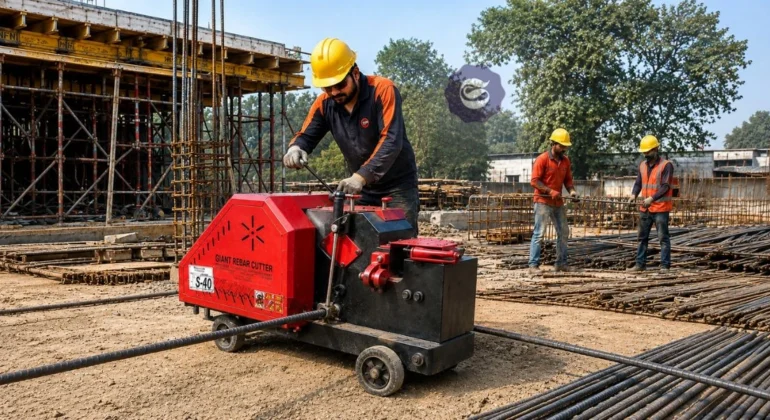

Cutting steel bars is a daily job on most construction sites. Many crews still use a chop saw. But more contractors are now switching to a bar-cutting machine. It cuts faster and cleaner. Also, it is safer to use.
This guide explains the difference in simple terms. It also shows how the wrong cutting tool can slow down your site and raise your costs.
Safety at sites matters too. OSHA’s rules for abrasive wheels and tools explain the risks of abrasive cutting equipment. A mechanical bar-cutting machine avoids many of these risks.
Bar Cutting Machine vs Chop Saw: What’s the Difference?
Both tools cut steel bars. But they work in very different ways.
A chop saw uses a spinning blade. The blade is abrasive or carbide. It cuts through friction. This creates heat, sparks, and noise. The blade also wears down over time.
A bar cutting machine works differently. It uses shearing force, not friction. It presses down and cuts the bar in one motion. There is less heat. There are fewer sparks. The cut is fast and clean.
This one difference affects everything else: speed, safety, cost, and cut quality. You can compare the types of rebar cutting machines and their uses to see which fits your project best.
The Real Problems Chop Saws Cause on Site
The real cost shows up on site, not on paper. Here is what actually happens when crews rely on a chop saw.
The Blade Wears Out Mid-Shift
Chop saw blades do not last long. They wear down fast, especially on thick bars. When the blade gets weak, cuts get rough. At some point, the blade must be changed. This often happens in the middle of a busy shift, not at a convenient time.
Workers End Up Waiting
Bar fixers need a steady supply of cut steel. If the saw slows down or stops, the whole crew waits. Idle workers still cost money. This is one of the most common hidden costs on a job site.
Bad Cuts Lead to Extra Rework
A worn blade does not cut the same length every time. Some bars come out too short. Some have rough, burred edges. Workers then have to trim, adjust, or ask for new bars. This work was never part of the plan, but it still takes time and money.
Sparks and Heat Raise Safety Risks
Chop saws throw sparks and get very hot. This is risky near wood, fuel, or gas lines. Sites need extra fire watch and safety checks. Even a small injury can lead to a report, an investigation, or a work stoppage. That stoppage costs far more time than the saw ever saved.
Small Problems Add Up to Big Costs
None of these issues look serious on their own. But add them up over a full project. Extra blades. Extra labor hours. Rework. Safety delays. These costs rarely show up in the original budget. Yet they still get paid.
A bar cutting machine is built to avoid these problems from the start.
Finished and More Accurate Cuts
Accuracy matters in reinforced concrete work. A bar that is too short or too long causes fitting problems. It also wastes material.
A bar cutting machine gives you a straight, clean cut every time. The blade does not wear down like an abrasive disc. A chop saw, on the other hand, often leaves rough edges. Its accuracy also drops as the blade ages.
Faster Cutting Means Faster Projects
Construction deadlines keep getting tighter. Your equipment needs to keep up.
A bar cutting machine cuts each bar in seconds. It keeps this speed even during long, high-volume runs. A chop saw is slower. It struggles even more with thick bars. And it slows down further as the blade wears out.
See the key benefits of using a steel bar cutting machine to understand how much time you can save.
A Safer Way to Cut Steel Bars
Worker safety should come first on every site.
A chop saw creates sparks, flying debris, loud noise, and high heat. These raise the risk of burns, eye injuries, and fire. The spinning blade itself is also a hazard.
A bar-cutting machine creates very few sparks. It shears the bar instead of grinding it. This makes the process safer and easier to control. Workers also feel less tired by the end of the shift.
Even so, safety still depends on proper training, guarding, and regular maintenance.
Less Maintenance, Less Downtime
Maintenance affects both cost and reliability.
Chop saws need frequent blade changes. They also need regular checks to stay safe. A bar-cutting machine uses strong, long-lasting blades. It needs only basic lubrication and routine checks. Use this list of bar-cutting machine inspection tips to build a simple maintenance routine.
Less Wasted Steel, More Savings
Every wrong cut adds to the project cost.
A bar-cutting machine cuts the same length every time. A chop saw drifts as the blade wears down. Small errors add up fast across hundreds of bars. Learn more about the true cost of a bar cutting machine and how it pays off over time.
Better for Thick, Heavy-Duty Bars
Big projects use bars of many sizes. Your equipment needs to handle all of them well.
A mechanical bar-cutting machine is made for reinforcement steel. It handles thick bars with ease. A chop saw struggles here. It slows down and puts extra strain on the motor and blade. Check out these bar-cutting machines for construction to find the right size for your project.
Less Noise on the Job Site
A chop saw creates a lot of dust, noise, and vibration. This makes work uncomfortable, especially over long shifts. A bar cutting machine runs cleaner and quieter. This helps keep the site organized and safe.
Which One Saves You More Money?
A chop saw costs less to buy. But that is not the full picture.
Over time, you pay for blades, repairs, slow output, and wasted steel. These costs add up fast. A mechanical bar-cutting machine often saves more money in the long run. Here’s why:
• Faster cutting speed
• Lower maintenance costs
• Longer-lasting parts
• Less wasted steel
• Higher daily output
• Better worker safety
Across several projects, these savings can add up significantly. Choose the right bar processing machine for efficient rebar processing for your construction needs.
Where Is a Bar Cutting Machine Used?
You’ll find mechanical bar cutting machines on many types of projects, such as:
• Homes and apartment buildings
• Commercial buildings
• Industrial sites
• Bridges and flyovers
• Metro and rail projects
• Precast concrete plants
• Rebar fabrication yards
If your site cuts reinforcement bars often, this machine can save you real time and money.
When Should You Still Use a Chop Saw?
A chop saw is not a bad tool. It still works well for small jobs, general repairs, and cutting steel that is not reinforcement bar.
But if you cut rebar every day, a bar-cutting machine is the smarter long-term choice.
Upgrade Your Cutting Machinery
Looking for a reliable bar-cutting machine? Smiit Constech offers machines built for speed, safety, and precision.