
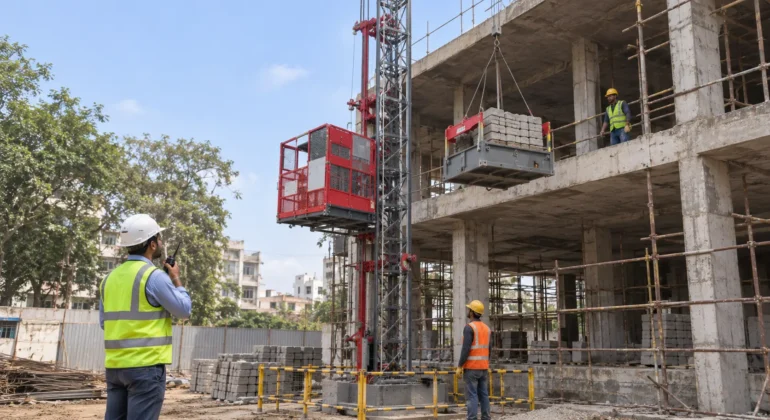

Material handling plays an important role in construction projects. Workers regularly move cement, bricks, concrete, steel bars and other building materials between different floors.
As building height increases, moving these materials manually becomes more difficult. It also affects work speed, labour requirements and site safety.
A suitable lifting system helps construction teams manage these challenges. However, choosing the right equipment involves more than checking its maximum lifting capacity. The type of materials, average load weight, lifting height, site conditions and daily handling requirements also influence the decision.
A Tower Hoist provides a practical solution for vertical material transportation on many construction sites. However, selecting the right capacity requires careful planning.
An undersized hoist may struggle with regular lifting demands, while an oversized system may increase equipment and operating costs unnecessarily.
Choosing the right equipment involves more than checking its maximum lifting capacity. Understanding the difference between a Tower Hoist and a Monkey Hoist also helps construction teams identify suitable lifting equipment.
Understand What Tower Hoist Capacity Means
Lifting capacity refers to the maximum weight that lifting equipment can safely handle under specified operating conditions. Manufacturers usually express this capacity in kilograms or tonnes.
For example, a hoist with a rated capacity of 1 tonne can lift loads weighing up to 1,000 kg, provided the equipment operates within its specified limits.
However, the rated capacity does not mean that every load is suitable for lifting. Operators also need to consider the weight of the container, bucket or lifting attachment where applicable. They must follow the manufacturer’s instructions for the permitted load configuration.
Construction teams should never estimate lifting capacity based only on the size of the lifting platform or bucket. They should also understand the different types of tower hoists used at construction sitesbefore selecting equipment.
Calculate the Total Weight of Materials
The first step in selecting the right capacity involves calculating the total weight of materials that require lifting.
Different construction materials have different weights. A small quantity of steel bars may weigh more than a much larger volume of lightweight materials.
Consider the following common materials.
- Cement bags – The total weight depends on the number of bags and the weight of each bag.
- Bricks and blocks – Their weight varies according to material, dimensions and quantity.
- Sand and aggregates – Moisture content and material density influence their overall weight.
- Steel bars – Diameter, length and quantity determine the total load.
- Concrete – The volume and mix density affect the lifting weight.
For accurate planning, calculate the combined weight of the materials and their container or lifting attachment.
For example, if a load contains 700 kg of construction materials and the lifting arrangement adds another 100 kg, the total suspended weight becomes 800 kg.
This calculation helps prevent overloading and supports a more suitable equipment selection.
Consider the Required Lifting Height
Lifting height directly affects equipment selection. A project involving a two-storey building has different lifting requirements from a high-rise construction project.
Construction teams need to identify the maximum vertical distance between the loading point and the unloading point.
They should also check the following factors.
- Total building height.
- Number of floors requiring material supply.
- Ground-level loading and unloading arrangements.
- Available installation space.
- Required lifting distance for regular operations.
A Tower Hoist must have a suitable lifting height for the project. Its supporting structure, installation arrangement and operating conditions must also match the site requirements.
For taller buildings, teams should pay particular attention to the manufacturer’s height limitations and installation guidelines. They must not extend the equipment beyond its approved configuration.
Evaluate the Daily Material Handling Requirement
Maximum load capacity is only one part of the selection process. Daily material handling requirements also determine whether the equipment suits the project.
For example, a construction site may need to lift 5 tonnes of materials throughout the day. However, this does not mean that the hoist needs to lift the entire quantity in one operation.
The team needs to understand how much material it transports during each lifting cycle.
Consider these points.
Number of lifting cycles
Estimate how many lifting operations the project requires during a working day. Frequent lifting may require a suitable capacity and efficient operating arrangement.
Material demand
Check the daily requirement for cement, bricks, steel and other materials. This helps determine the expected workload.
Loading and unloading time
Consider how long workers take to prepare, load and unload each batch. Poor coordination can increase waiting time.
Work schedule
Identify peak material handling periods. Some construction activities require more materials at specific stages of the project.
These details help teams select equipment that supports regular material movement without creating unnecessary pressure on the lifting system.
“Efficient lifting arrangements can also help reduce labour requirements and improve productivity. Read more about how a multifunctional tower hoist reduces material handling costs.
Understand the Difference Between Load Capacity and Lifting Efficiency
Load capacity and lifting efficiency are two different considerations.
Load capacity indicates how much weight the equipment can safely lift. Lifting efficiency relates to how effectively the equipment completes material transportation during normal operations.
For example, a hoist with a higher rated capacity does not automatically provide better productivity. Actual performance also depends on lifting speed, travel distance, loading time and the number of operating cycles.
Construction teams should consider the complete lifting process rather than focusing on one specification.
A properly planned lifting arrangement helps maintain a steady supply of materials. It also reduces unnecessary waiting time between construction activities.
Check Site Conditions Before Selecting the Hoist
Every construction site has different physical and operational conditions. These conditions influence equipment selection, installation and safe operation.
Before choosing a lifting system, assess the available installation area and surrounding environment.
Important factors include:
- Ground stability – The foundation must support the equipment and its installation structure.
- Available space – The site needs sufficient room for installation, loading and unloading.
- Building layout – Floor openings and material transfer points must support safe movement.
- Obstructions – Nearby structures, electrical lines and other equipment may affect lifting operations.
- Weather conditions – Wind, rain and other environmental factors may influence safe operation.
A proper site assessment helps identify potential problems before installation begins. It also ensures that the selected equipment matches the actual working environment.
Include Safety Factors in Capacity Selection
Safe material handling depends on correct equipment selection and disciplined operation. Even a suitable lifting capacity cannot prevent accidents if workers ignore operating instructions.
Construction teams should follow these important safety practices.
Avoid overloading
Never exceed the manufacturer’s rated safe working load. Operators should check the weight of every load before lifting.
Use suitable lifting attachments
Buckets, platforms, cages and other attachments must be compatible with the equipment. Their weight must also be included in the load calculation where applicable.
Check safety mechanisms
Inspect limit switches, brakes, locking arrangements and other safety devices before operation. Ensure that emergency controls work correctly.
Maintain proper load distribution
Place materials evenly and secure them before lifting. Uneven or loose loads can create instability during movement.
Train equipment operators
Only trained and authorised personnel should operate the lifting equipment. Workers should understand load limits, operating controls and emergency procedures.
Schedule regular inspections
Check ropes, chains, electrical connections, structural components and mechanical parts at suitable intervals. Follow the manufacturer’s maintenance schedule.
These practices help reduce operational risks and support safer material transportation.
Choose Capacity Based on Actual Project Requirements
Once the team understands the load weight, lifting height, daily demand and site conditions, it can compare suitable equipment capacities.
A practical selection process includes the following steps.
- Calculate the maximum weight of materials handled in one lifting cycle.
- Include the weight of the lifting attachment and other relevant components.
- Identify the required vertical lifting height.
- Estimate the number of daily lifting cycles.
- Check the site layout and installation requirements.
- Compare the equipment specifications with the project’s operating needs.
- Confirm that the selected configuration meets applicable safety requirements.
For instance, a multifunctional tower hoist with a rated capacity of 1–1.5 tonnes may suit certain construction applications. However, the final selection depends on the actual load, lifting arrangement, height and manufacturer’s approved operating conditions.
Construction teams should also consider future project stages. Material requirements may increase as the building progresses. Planning for these changes helps avoid equipment limitations later.
Why Proper Capacity Selection Matters
Selecting the right lifting capacity offers benefits beyond moving materials from one floor to another.
It helps construction teams maintain a consistent material supply and organise site activities more effectively.
Some key benefits include:
- Improved site productivity – Suitable lifting capacity supports regular material movement.
- Better load management – Workers can plan material batches according to actual requirements.
- Reduced manual handling – Mechanical lifting reduces the need to carry heavy materials manually.
- Improved operational safety – Correct load limits help minimise overloading risks.
- Better equipment utilisation – Appropriate equipment selection prevents unnecessary capacity mismatches.
- Efficient project planning – Predictable lifting operations support better coordination between teams.
These advantages depend on proper installation, trained operators, regular maintenance and compliance with safety procedures.
Make an Informed Decision for Safer Material Handling
Determining the ideal lifting capacity requires a clear understanding of the project’s material requirements, lifting height, daily workload and site conditions. No single capacity suits every construction project.
The right approach involves calculating actual load weights, considering lifting attachments, evaluating operating cycles and checking the equipment’s technical specifications. Safety remains a priority throughout the selection and operating process.
A carefully selected Tower Hoist helps construction teams manage vertical material transportation with greater control. It also supports smoother site operations and reduces unnecessary manual handling.
For construction projects that require reliable vertical material movement, Smiit Constech offers a range of material handling solutions, including multifunctional tower hoists with 1–1.5 tonne lifting capacities and lifting heights of up to 190 metres, subject to the specified configuration.
Visit Smiit Constech to explore material handling equipment and discuss the lifting requirements of your construction project with the team.